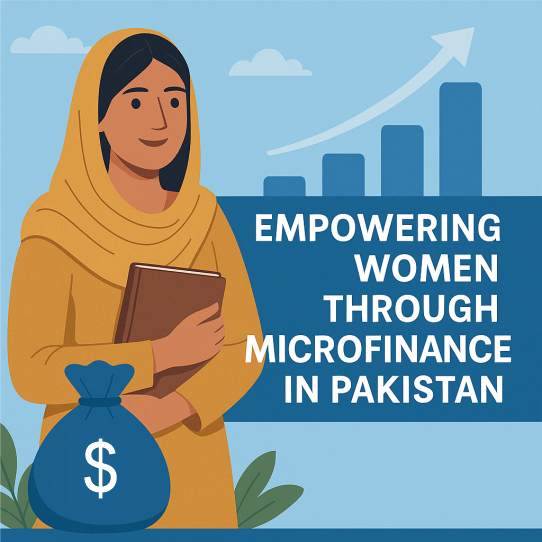
In a country where many women still face systemic barriers to education, employment, and financial independence, microfinance has emerged as a powerful tool for empowerment. By offering small loans to women who are often excluded from traditional banking, microfinance is helping to reshape Pakistan’s socio-economic landscape—one woman at a time.
What Is Microfinance?
Microfinance involves providing small-scale financial services—such as loans, savings, and insurance—to people who lack access to conventional banking. These services are especially critical for low-income women, who use these funds to start or expand small businesses, support their families, and break the cycle of poverty.
Why Microfinance Matters for Women in Pakistan
Women in Pakistan, particularly in rural areas, often face:
- Limited access to capital
- Cultural restrictions on employment
- Lack of property ownership or collateral
- Minimal decision-making power in the household
Microfinance challenges these limitations by giving women direct control over financial resources, encouraging entrepreneurship, and boosting their confidence.
How Microfinance Transforms Lives
1. Economic Independence
With access to microloans, women are starting tailoring shops, livestock farms, grocery kiosks, and home-based food services. This helps them generate income and reduce dependency.
2. Improved Family Well-Being
When women earn, they invest in health, education, and nutrition for their children. Microfinance uplifts not just women—but entire families.
3. Community Development
Economically active women become role models. They inspire others, strengthen local economies, and participate more actively in community decisions.
4. Breaking Social Norms
Access to finance gives women a voice. It fosters leadership and challenges deep-rooted gender norms that have traditionally silenced or sidelined them.
Success Stories from the Field
In many villages of Punjab and Sindh, women supported by microfinance institutions like Kashf Foundation, Akhuwat, and First Women Bank have built thriving businesses. From making embroidered clothing to selling dairy products, these women are proving that when given the opportunity, they can be agents of economic change.
Challenges That Remain
Despite its benefits, microfinance is not a silver bullet. Some challenges include:
- High interest rates from some lenders
- Lack of financial literacy
- Cultural resistance from male family members
- Limited market access for products created by women
To address these, there’s a need for more training programs, peer support networks, and inclusive banking policies that make microfinance safer and more effective.
The Role of Women Empowerment Groups (WEG)
Organizations like Women Empowerment Group (WEG) play a crucial role in bridging the gap between finance and social support. By combining microfinance with mentorship, business training, and rights awareness, WEG ensures that empowerment is not just financial—it’s holistic.